Vision
To build a community of future legal leaders and policy thinkers who will drive institutional and system-level transformation in India’s law and justice system.


The NIST Fellowship is a pioneering initiative designed to nurture the next generation of legal leaders and policymakers and foster a community of practice.
This full-time, hybrid, and funded opportunity empowers researchers to challenge themselves and develop innovative regulatory and policy proposals to transform our public institutions. The programme will give the fellows a chance to join and collaborate with our network and community of like-minded doers. The programme aims to inspire problem solvers to work on solving some of India’s biggest institutional and systems challenges.
FAQs
DAKSH has over the years done pioneering work on reimagining courts and tribunals. One of our recent focus areas has been commercial tribunals, as part of the ‘Transforming Tribunals’ initiative, where we see them not merely as forums for resolving disputes, but as engines of economic justice and powerful drivers of growth. Delays, uncertainty, and inefficiencies in justice delivery by regulators, commercial tribunals and appellate courts erode investor confidence and affect India’s global competitiveness and overall ease of doing business.
To this end, the inaugural cohort will be focusing on the National Company Law Tribunal (NCLT), National Company Law Appellate Tribunal (NCLAT), Debt Recovery Tribunal (DRT), and the Debt Recovery Appellate Tribunal (DRAT), and the relevant regulators (IBBI, CCI, RoC, NFRA, etc) and appellate courts for these domains. Our ultimate goal is to spark system-level reforms, focusing on both the functioning of tribunals and underlying commercial laws, to ensure that our commercial policy is aligned with the needs of the evolving commercial landscape.
The Fellowship will help bridge the gap between theoretical knowledge and practical application, and help facilitate you to think more deeply about institutional and system level issues plaguing our law and justice system. You will become part of a community of practice that will enable you to work with like-minded peers and experts to drive meaningful and impactful reforms to enhance the efficiency and effectiveness of India’s institutions and systems both during and after the Fellowship.
Any institutional and system-level transformation towards improving and strengthening our law and justice system invariably affects our society, public institutions, and economy. Consequently, through this Fellowship, you will get the distinct opportunity to ideate, develop and present proposals that can drive cross-systems impact at the intersection of our society, public institutions and economy, ranging from driving ease of doing business through streamlined legal processes, building investor confidence, driving increased foreign investment and making the judicial system more accessible and sustainable.
DAKSH Society (DAKSH) is India’s leading think-tank and research institution focused on law and justice system reforms and access to justice. We are committed to driving meaningful institutional and system transformation to make the judicial system more efficient and effective. To this end, as thought leaders in the space, we have launched this fellowship programme to empower the next generation of legal leaders to transform India’s commercial justice system through experiential learning, innovative research, and collaborative problem-solving
An NIST Fellow is someone who:
● Is passionate about driving meaningful institutional and system-level transformation in India’s judicial system, particularly in the commercial law and policy landscape.
● Holds a bachelor’s degree (preferably in Law, Economics, Public Policy, Data Science) with a maximum of 0-4 years of post-qualification experience.
● Can commit to a full-time engagement of 40 hours/week for the next 6 months, demonstrating dedication and enthusiasm for the fellowship programme.
● Has previous experience in academic or policy writing, showcasing their ability to analyse complex issues and develop well-structured arguments.
● You will be required to publish at least 6 blogs through the course of the fellowship which will be published on the DAKSH website.
● You will have to attend regular mentoring/check-in calls with the DAKSH team and the mentors.
● You will be working on a dedicated capstone project, which would be in the form of a white paper, report or policy proposal which will be published by DAKSH as part of a compendium.
● You will be required to assist on DAKSH’s ongoing programmes and research projects (this could include developing proposals, concept/background notes for workshops/sessions, and cultivating research collaborations).
● You will be required to mandatorily present your capstone project in a 2-3 day in-person conference that will be held in Bangalore/ Delhi in the last 4 weeks of the fellowship.
● You will maintain a high level of professionalism and ownership in all deliverables and interactions.
● You will proactively and transparently share regular updates and progress reports on your work.
The NIST Fellowship offers a range of benefits including:
● Stipend: A monthly stipend of INR 50,000 to support fellows during the programme.
● Mentorship and Guidance: Monthly mentoring calls with experts to fine-tune research and discuss capstone projects.
● Access to DAKSH’s Network of Experts: Opportunities to tap into DAKSH’s network for guidance and support.
● Training and Skill-Building: Training on data analysis, policy analysis, and report writing to enhance fellows’ skills.
● Community Membership: Membership to the DAKSH Community, with priority access to events and networking opportunities for the duration of the Fellowship.
● Fully-Funded In-Person Conference: Funding assistance to attend a conference to present your capstone projects and network with leaders and peers in the space.
● Opportunity to Produce Actionable Research Outputs: Contribution to actionable research and policy analysis through blogs and podcasts
● Publication Opportunity: All the capstone projects would be published by DAKSH in a compendium after the conclusion of the Fellowship Programme. You may also get the opportunity to co-author the above mentioned work with members from the DAKSH team and the expert mentors (depending on the quality of the outputs).
● Certificate: A certificate acknowledging participation in the fellowship programme upon successful completion.
● Letter of Recommendation: Exceptional fellows may secure a Letter of Recommendation from the DAKSH team and their mentors.
● Financial Assistance: Financial assistance to cover certain miscellaneous expenses for carrying out fieldwork.
Anshuman Sahoo
by Anshuman Sahoo
Core Problem: Weak economic scrutiny at the appellate level limits effective review of Competition Commission of India (CCI) decisions, eroding the quality of competition enforcement
Mean reduction in economic reasoning score (CCI → NCLAT)
Issues where NCLAT reasoning was weak on economic and legal counts
Compression in the most complex multi-market leveraging cases
The study reveals a systematic ‘economic-analytic compression’ as cases move from the CCI to the NCLAT with the appellate tribunal routinely failing to engage with the economic substance of competition findings. NCLAT reasoning scored lower in 25 of 35 issue-pairs examined, with the most complex multi-market cases suffering the sharpest drop.
KEY RECOMMENDATIONS
This blog examines the role of Information Utilities (IUs) in India’s Insolvency and Bankruptcy Code and argues that their current design and functioning exhibit instances of epistemic fragmentation.

Khushbu Shah
by Khushbu Shah
Core Problem: The Debt Recovery Tribunal system suffers from an ambiguous delay definition, summons-stage bottlenecks, and capacity constraints — resulting in disposal rates of only 15–20% across Mumbai DRTs.
Average disposal rate across Mumbai DRTs (2022–25)
Average disposal time vs 180-day statutory limit
Cases disposed within the 180-day window
Administrative data from three Mumbai DRT benches reveals systemic dysfunction: average case disposal time ranges from 1.67 to 2.87 years against a 180-day statutory target, with fewer than 7% of cases resolved within the prescribed timeframe. The paper traces delays to three compounding factors — unclear definition of delay, manual summons processes, and chronic vacancies that cascade into adjournments.
KEY RECOMMENDATIONS
When two statutes with strong and overlapping powers apply to the same situation, a conflict of authority is inevitable.

Satyansh Singh Parmar
by Satyansh Singh Parmar
Core Problem: The institutional design of NCLT is fundamentally misaligned with IBC objectives — its dual mandate over Company Law and insolvency creates structural conflicts that fuel delays.
Cases pending before NCLT (10-yr backlog at current rate)
Cases breaching the 14-day admission limit
Cases exceeding the 330-day CIRP ceiling
With ~30,600 cases pending and a projected 10-year backlog (Economic Survey 2025-26), the NCLT’s dual mandate is its greatest structural liability. The average admission time of 526 days and resolution time of 883 days reveal an institution whose design actively defeats the time-bound promise of the IBC. The paper traces this failure to conflicting procedural cultures between Company Law and IBC adjudication.
KEY RECOMMENDATIONS
The blog post attempts to examine the extent and nature of delays, highlighting that as of 2025, over 1,500 matters still remain pending before APTEL, some dating back more than a decade.

Sumit Kumar
by Sumit Kumar
Core Problem: The statutory promise of time-bound insolvency resolution is defeated not by law but by NCLT Kolkata’s structural constraints: capacity limits, dual jurisdiction, poor infrastructure, and inequitable bench time.
Avg cases listed per day across Court I & II
IBC cases exceeding 330-day statutory limit
Court II adjournments with no reason recorded
Using primary data from courtroom observation, disposed-case analysis, and a practitioner survey, the study documents an institution in paradox: the quality of judicial reasoning scored 3.78/5 (the highest metric), yet overall timeline performance scored 3.16/5 (the weakest). Eighty-three per cent of respondents rated timeline performance 3 or lower, while 73% attributed peak delays to the ‘during proceedings’ stage.
KEY RECOMMENDATIONS
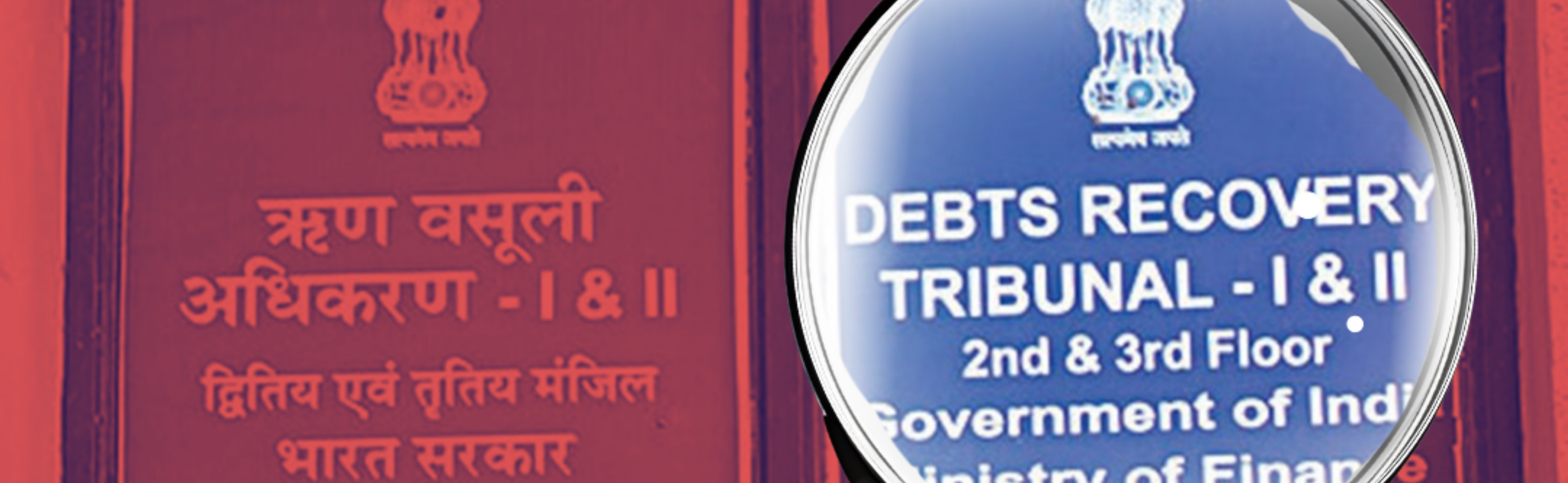
The Debt Recovery Tribunal (DRT) system, introduced under the Recovery of Debts Due to Banks and Financial Institutions Act, 1993 (RDDBFI Act), was seen as India’s institutional answer to the inefficiency of the civil courts in handling financial disputes.

Sundaramurti Ramesh
by Sundaramurti Ramesh
Core Problem: IBC delays impose quantifiable economic harm on creditor recoveries, firm value and credit markets — but the sources of delay and the point at which costs become critical are poorly understood, limiting evidence-based reform.
Share of CIRP delay attributable to the tribunal
Empirical outer boundary beyond which recovery erodes
Fall in resolution probability per additional interlocutory application (AI)
Across 492 CIRP cases, the study shows NCLT accounts for 65% of total delay, with each interlocutory application reducing resolution probability by 22%. Beyond the empirically derived 1,084-day threshold, creditor recoveries fall by 18-20 percentage points. The IBC’s Macro Stress Index (MSI) also shows that the framework improved financial stability post-2017 (MSI –1.20) but COVID-era delays reversed gains (MSI –3.03).
KEY RECOMMENDATIONS
India’s judiciary, a constitutionally mandated pillar of democracy, exemplifies a pure public good characterised by non-excludability and non-rivalry. This study examines judicial efficiency as public good provision, analysing empirical data from 2018 and 2024 to document a deepening crisis in access to justice.

Swikruti Mohanty
by Swikruti Mohanty
Core Problem: The NFRA’s statutory framework fails to realise its founding mandate of independent oversight of ‘public interest’ entities, while complete government dependence curtails fiscal autonomy.
Borrowings of private NBFCs-ML from banks — outside NFRA ambit
Structural reforms proposed across jurisdiction & funding
The paper exposes two critical gaps: an exhaustive-list approach to jurisdiction that creates regulatory blind spots (33.3 % of private NBFC-Middle Layer borrowings originate from public banks yet fall outside NFRA oversight), and a funding model fully dependent on government appropriations. Together, these undermine the regulator’s independence and effectiveness.
KEY RECOMMENDATIONS
Most debates on the deployment of artificial-intelligence (AI) in Indian courts these days focus on the visible and attention-grabbing concerns like hallucinated case law, presence of deepfakes in evidentiary records

FAQs
DAKSH has over the years done pioneering work on reimagining courts and tribunals. One of our recent focus areas has been commercial tribunals, as part of the ‘Transforming Tribunals’ initiative, where we see them not merely as forums for resolving disputes, but as engines of economic justice and powerful drivers of growth. Delays, uncertainty, and inefficiencies in justice delivery by regulators, commercial tribunals and appellate courts erode investor confidence and affect India’s global competitiveness and overall ease of doing business.
To this end, the inaugural cohort will be focusing on the National Company Law Tribunal (NCLT), National Company Law Appellate Tribunal (NCLAT), Debt Recovery Tribunal (DRT), and the Debt Recovery Appellate Tribunal (DRAT), and the relevant regulators (IBBI, CCI, RoC, NFRA, etc) and appellate courts for these domains. Our ultimate goal is to spark system-level reforms, focusing on both the functioning of tribunals and underlying commercial laws, to ensure that our commercial policy is aligned with the needs of the evolving commercial landscape.
The Fellowship will help bridge the gap between theoretical knowledge and practical application, and help facilitate you to think more deeply about institutional and system level issues plaguing our law and justice system. You will become part of a community of practice that will enable you to work with like-minded peers and experts to drive meaningful and impactful reforms to enhance the efficiency and effectiveness of India’s institutions and systems both during and after the Fellowship.
Any institutional and system-level transformation towards improving and strengthening our law and justice system invariably affects our society, public institutions, and economy. Consequently, through this Fellowship, you will get the distinct opportunity to ideate, develop and present proposals that can drive cross-systems impact at the intersection of our society, public institutions and economy, ranging from driving ease of doing business through streamlined legal processes, building investor confidence, driving increased foreign investment and making the judicial system more accessible and sustainable.
DAKSH Society (DAKSH) is India’s leading think-tank and research institution focused on law and justice system reforms and access to justice. We are committed to driving meaningful institutional and system transformation to make the judicial system more efficient and effective. To this end, as thought leaders in the space, we have launched this fellowship programme to empower the next generation of legal leaders to transform India’s commercial justice system through experiential learning, innovative research, and collaborative problem-solving
An NIST Fellow is someone who:
● Is passionate about driving meaningful institutional and system-level transformation in India’s judicial system, particularly in the commercial law and policy landscape.
● Holds a bachelor’s degree (preferably in Law, Economics, Public Policy, Data Science) with a maximum of 0-4 years of post-qualification experience.
● Can commit to a full-time engagement of 40 hours/week for the next 6 months, demonstrating dedication and enthusiasm for the fellowship programme.
● Has previous experience in academic or policy writing, showcasing their ability to analyse complex issues and develop well-structured arguments.
● You will be required to publish at least 6 blogs through the course of the fellowship which will be published on the DAKSH website.
● You will have to attend regular mentoring/check-in calls with the DAKSH team and the mentors.
● You will be working on a dedicated capstone project, which would be in the form of a white paper, report or policy proposal which will be published by DAKSH as part of a compendium.
● You will be required to assist on DAKSH’s ongoing programmes and research projects (this could include developing proposals, concept/background notes for workshops/sessions, and cultivating research collaborations).
● You will be required to mandatorily present your capstone project in a 2-3 day in-person conference that will be held in Bangalore/ Delhi in the last 4 weeks of the fellowship.
● You will maintain a high level of professionalism and ownership in all deliverables and interactions.
● You will proactively and transparently share regular updates and progress reports on your work.
The NIST Fellowship offers a range of benefits including:
● Stipend: A monthly stipend of INR 50,000 to support fellows during the programme.
● Mentorship and Guidance: Monthly mentoring calls with experts to fine-tune research and discuss capstone projects.
● Access to DAKSH’s Network of Experts: Opportunities to tap into DAKSH’s network for guidance and support.
● Training and Skill-Building: Training on data analysis, policy analysis, and report writing to enhance fellows’ skills.
● Community Membership: Membership to the DAKSH Community, with priority access to events and networking opportunities for the duration of the Fellowship.
● Fully-Funded In-Person Conference: Funding assistance to attend a conference to present your capstone projects and network with leaders and peers in the space.
● Opportunity to Produce Actionable Research Outputs: Contribution to actionable research and policy analysis through blogs and podcasts
● Publication Opportunity: All the capstone projects would be published by DAKSH in a compendium after the conclusion of the Fellowship Programme. You may also get the opportunity to co-author the abovementioned work with members from the DAKSH team and the expert mentors (depending on the quality of the outputs).
● Certificate: A certificate acknowledging participation in the fellowship programme upon successful completion.
● Letter of Recommendation: Exceptional fellows may secure a Letter of Recommendation from the DAKSH team and their mentors.
● Financial Assistance: Financial assistance to cover certain miscellaneous expenses for carrying out fieldwork.
For this edition of the Fellowship Programme, we received funding support from Premji Invest. Premji Invest primarily supports the philanthropic initiatives of the Azim Premji Foundation, a not-for-profit organization that seeks to improve the lives of the underserved and underprivileged in society.
If you have any questions about the programme, you can reach out to us at abhishek@dakshindia.org
If you are an organisation either working towards institutional and system transformation, or is interested in supporting our work in the same, please feel free to reach out to our Programme Director – Surya Prakash B S at surya@dakshindia.org or our Programme Manager – Abhishek Jain at abhishek@dakshindia.org
© 2021 DAKSH India. All rights reserved
Powered by Oy Media Solutions
Designed by GGWP Design