

Report Launch | AI For Justice: Ethical, Fair and Robust Adoption in India’s Courts
AI is increasingly finding its way into India’s courts. While it holds promise to improve access to justice and strengthen institutional efficiency, its adoption must be ethical, transparent, and rights-based.

Roundtable on “Navigating the Robust and Ethical Adoption of AI in the Indian Judiciary”
At DAKSH, we were glad to partner with UNDP in India and Digital Futures Lab to host a roundtable on “Navigating the Robust and Ethical Adoption of AI in the Indian Judiciary” as a precursor to the India AI Impact Summit 2026.

Understanding Writ Litigation against BBMP : An analysis of 2024 Judgements
The Bruhat Bengaluru Mahanagara Palike (BBMP), the municipal corporation of Bengaluru city, till recently, managed core urban municipal functions in Bengaluru, including property tax administration, building regulations, and licensing.

ThePrintAM: What does research institute DAKSH’s report say about the state of India’s commercial tribunal system?
ThePrintAM: What does research institute DAKSH's report say about the state of India's commercial tribunal system?
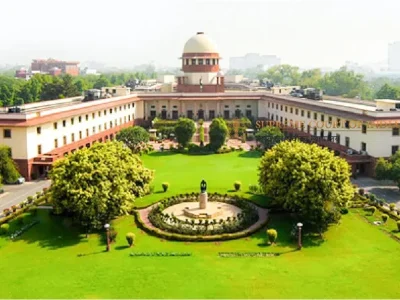
Lessons for Judiciary from Space Sector
सारांश: इस लेख में सूर्य प्रकाश यह समझाने की कोशिश करते हैं कि कैसे भारत द्वारा अंतरिक्ष क्षेत्र में लाए गए सुधार, हमारी न्याय व्यवस्था के लिए भी एक मिसाल बन सकते हैं। उनका कहना है कि अगर हमें न्याय व्यवस्था का कायापलट करना है, तो हमें हर न्यायिक संस्था के काम में स्पष्टता लानी होगी, प्राइवेट सेक्टर को साथ लेना होगा और विशेष तकनीकी पद तैयार करने होंगे, बिल्कुल वैसे ही जैसे eCourts Phase III के विज़न डॉक्यूमेंट में परिकल्पित किया गया है।
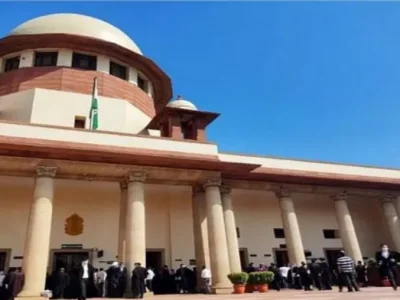
The missing piece in India’s reform story—a strong tribunal system
The Supreme Court’s judgment pushes the conversation in the right direction, but it does not resolve the full range of structural issues that determine how tribunals work on the ground.

Fast-track courts may not be the cure
The Karnataka District Judiciary Reforms Bill 2025 is the most recent attempt at judicial reform in the state. In 2024, the legislature enacted amendments to the Civil Procedure Code (CPC), introducing case management hearings in district courts, bef...Read more at: https://www.deccanherald.com/opinion/fast-track-courts-may-not-be-the-cure-3816439
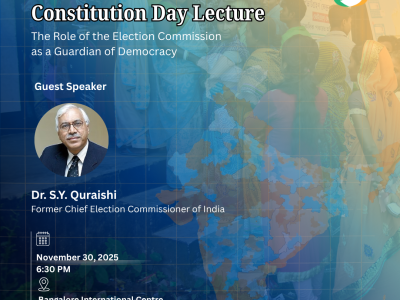
The Role of the Election Commission as a Guardian of Democracy | DAKSH Annual Lecture
DAKSH is excited to announce its Fourteenth Annual Constitution Day Lecture on 30 November 2024, at the Bangalore International Centre at 6:30 PM.
The guest speaker for the event is Dr. S. Y. Quraishi, Former Chief Election Commissioner of India.

OPINION | Trillions are stuck in disputes at commercial tribunals but reform agenda ignores it
India’s economic reform journey is a patchwork of contradictions. Highs such as GST 2.0, which promises to simplify compliance, widen the tax base, and smooth the arteries of commerce, are celebrated. Yet hidden lows continue to act as speedbreakers on India’s path to becoming a global ease-of-doing-business powerhouse.

Reform or redundancy? A breakdown of DAKSH report on state of commercial tribunals in India
New Delhi: Ideated as special adjudicatory bodies to review administrative decisions, tribunals across sectors have expanded their powers beyond the ambit of administrative laws. The expectation was that the commercial tribunals would deliver better outcomes than traditional courts. However, in practice, they struggle with the same problems.