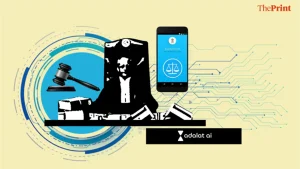


What could a digitised justice system as envisioned under e-Courts Phase 3 mean for people and institutions?
India’s eCourts Phase 3 is bringing more judicial processes online, with digital filing, virtual hearings, connected databases, AI-enabled tools, transcription, and many more.
Surya Prakash B S and Smita Mutt, in this commentary piece for The Policy Edge, look beyond the technology itself and question what this transformation means in practice for an accessible justice system, institutional accountability and the role of human judgement.
The piece examines how digitalisation can make the justice system more accessible, connected and efficient, while ensuring that technology does not create new barriers or replace the expertise that remains central to justice delivery.
Read the commentary here – https://www.policyedge.in/p/e-courts-phase-iii-and-the-next-test-for-digital-justice-in-india
Read the brief here – https://www.policyedge.in/p/e-courts-phase-iii-expands-digital-filing-remote-hearings-and-connected-justice-systems
The views expressed in this article are solely those of the author’s, and they do not represent the views of DAKSH.