
CIIRP: A New Approach against the core principles of IBC
The Insolvency and Bankruptcy Code (IBC) was built upon the recommendations of the BLRC committee led by TK Vishwanathan.

NCLT Admission Lag: 14 Day Rule of Admission
For almost a decade, the 14 day timeline under Section 7(4)1 of the Insolvency and Bankruptcy Code, 2016 (IBC) was treated by the Adjudicating Authority(AA) as directive rather than mandate.

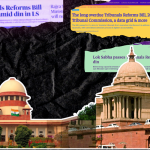
A Unified Administrative Backbone for Betterment of Tribunals:Case for a National Tribunal Commission in India
The proposal for a National Tribunal Commission (NTC) in India addresses a long standing structural issue that currently ties tribunals to their parent ministries.
How India’s Insolvency & Bankruptcy Code Stacks Up Against the World
When Parliament enacted the Insolvency and Bankruptcy Code, 2016 (IBC), it did so with utmost urgency.
Mining the Machine: Building a Data Architecture for India’s Insolvency Ecosystem
India’s insolvency infrastructure generates a huge amount of information, but most of it sits scattered across government websites in formats that are difficult to analyse.
Quantifying the Unquantifiable: Why Empirical Research on India’s Insolvency Tribunals Keeps Running Into Walls
Anyone who has tried to study how well India’s insolvency tribunals actually perform quickly encounters a frustrating paradox: the questions that matter most to policymakers are precisely the ones the available data makes hardest to answer.

GSTAT’s Real Challenge Is Not Backlog – It Is Transition!
AS the Goods and Services Tax Appellate Tribunal (GSTAT) begins operations across India, it arrives at a time when concerns about global funds flow, working capital crunch, tax uncertainty, and judicial efficiency are increasingly shaping economic policy discussions.

National Judicial Reforms Commission: A proposal we ignore at our peril [Part II]
The fundamental flaw is the absence of an institutional home for reform: a body empowered to take a comprehensive, long-term view of judicial transformation.

National Judicial Reforms Commission: A proposal we ignore at our peril [Part I]
For core and essential functioning, the judiciary must be treated as one unified system, not a federated coalition of wildly individualistic sub-systems.
We’re not ready for ‘One Case One Data’. Court records are too unorganised for digitisation
No AI tool can reliably extract or interpret intelligible court documents without the contextualised human intelligence that created them. As a system, OCOD will be ripe with such files.