





Daksh

AI for Justice: Ethical, Fair and Robust Adoption in India’s Courts - Daksh
Search
Close this search box.
Search
Close this search box.

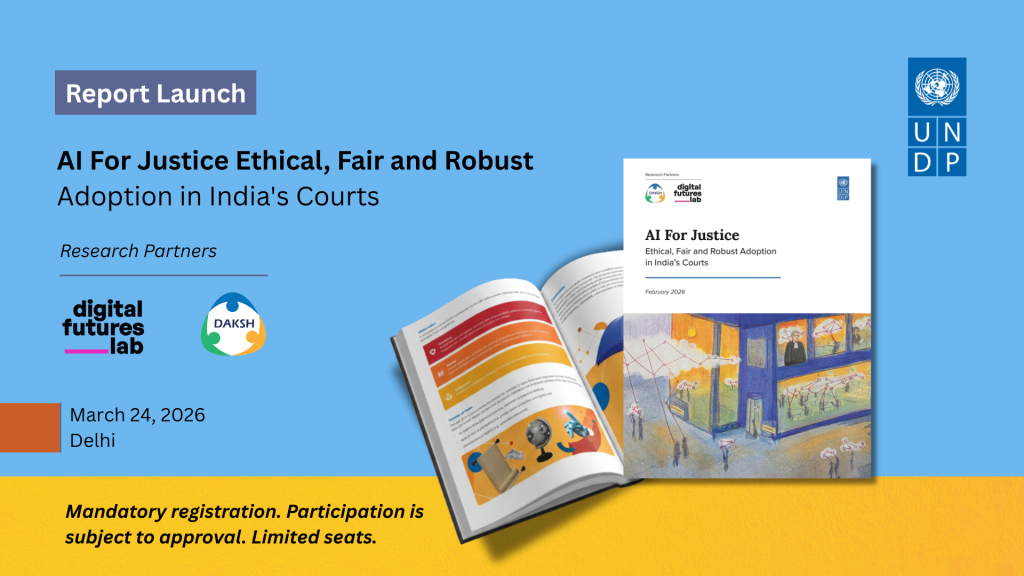
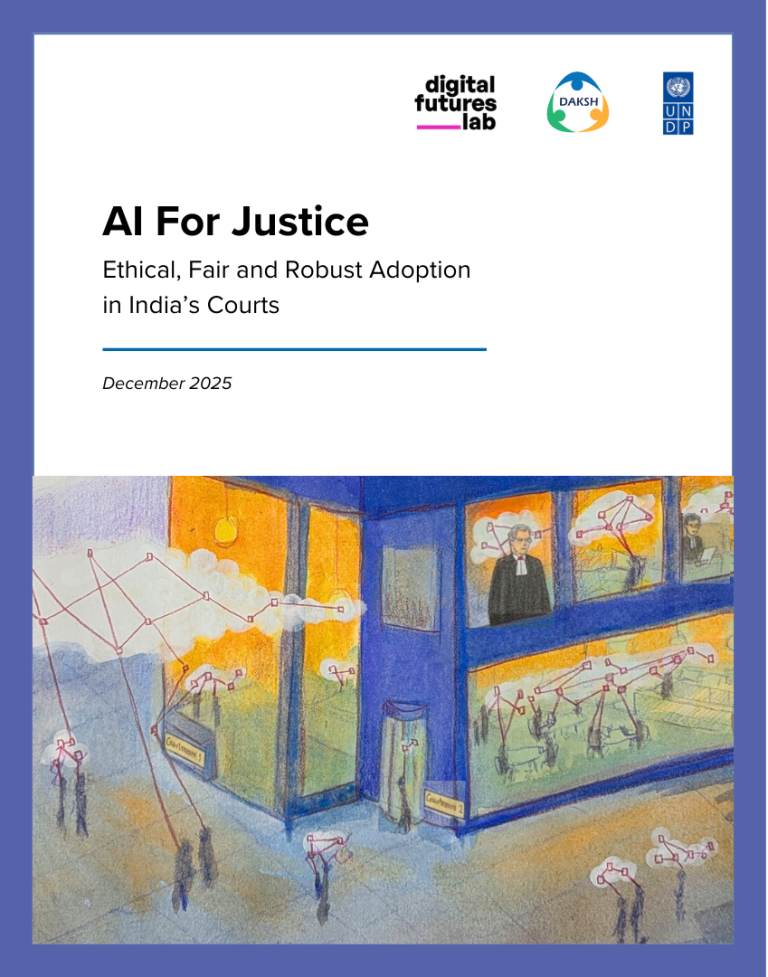
AI for Justice: Ethical, Fair and Robust Adoption in India’s Courts

Artificial Intelligence (AI) is increasingly being used within Indian courts, often via experimental or “shadow” forms of use.

While properly governed under rights-based principles, clear regulatory frameworks, and transparent and effective safeguards, AI systems can

  • improve access to justice,
  • support the Sustainable Development Goals (SDGs), and
  • strengthen institutional performance.

However, AI adoption occurs under stretched administrative capacity and is largely driven by individual champions, making it vulnerable to disruption due to judicial transfers or retirements.

As custodians of highly sensitive information, courts must exercise caution in sharing data with external actors who do not operate under the same ethical mandates or levels of public responsibility. Risks such as bias, hallucinations, lack of transparency, and limitations in underlying datasets pose specific risks to judicial legitimacy. While concerns around data localisation, security and accuracy are common, ethical considerations and mechanisms for post-deployment monitoring must be further developed.

Assessment Tools

Given the absence of established processes and the potential for harm, this report proposes a reproducible, rights-based and risk-sensitive framework for AI adoption in the Indian judiciary. Tailored to the institutional realities of courts in India, this framework comprises four assessments:

Institutional Readiness – evaluates human resources, infrastructure and compliance preparedness before any adoption.

Technical Assessment – examines vendor capabilities, data governance, transparency, security and accountability at the tool level.

For Solution Providers

Risk Assessment – identifies potential harms and safeguards at the specific use-case level.

Ongoing/Continuous Assessment monitors real-world impacts, success metrics and emergent risks throughout deployment.

MEDIA

In July this year, the Kerala High Court published a set of guidelines for Artificial Intelligence (AI) use by the district judiciary (“Policy Regarding Use of Artificial Intelligence Tools in District Judiciary”). As the first policy in the country directly addressing AI use in judicial processes and setting out strict safeguards, it is timely.

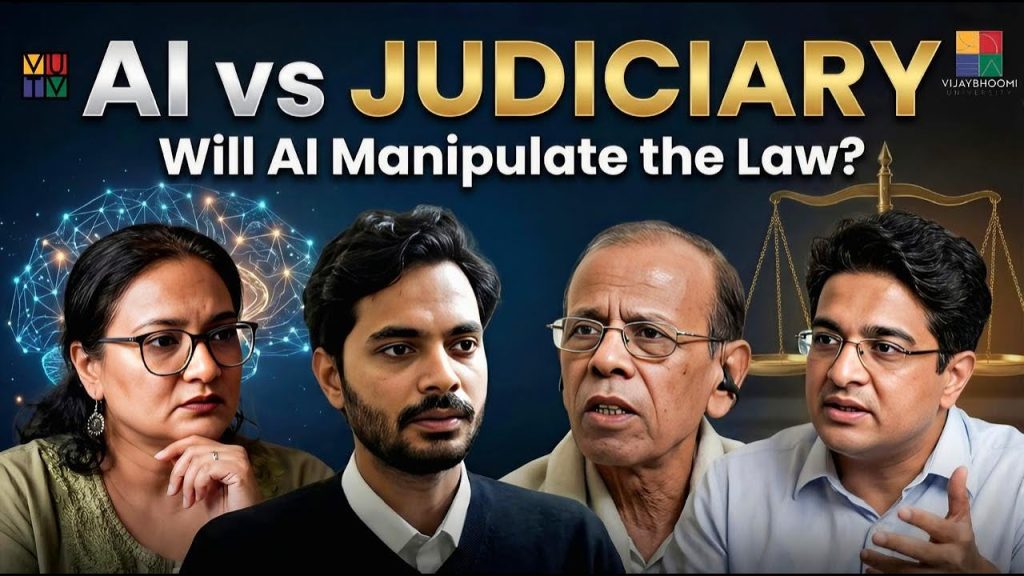
Interview: Can AI Comprehend The Complexities Of Indian Courtrooms?

As Kerala High Court mandates Adalat AI to transcribe witness depositions, Decode spoke to lawyer Leah Verghese to understand the implications of AI in courtrooms.

AI in the Indian Judiciary: Insights from the Supreme Court White Paper | Expert Roundtable

As AI begins to reshape legal services and court processes in India, the Supreme Court of India’s White Paper on Artificial Intelligence & the Judiciary has sparked a crucial national conversation.

EVENTS

At DAKSH, we were glad to partner with UNDP in India and Digital Futures Lab to host a roundtable on “Navigating the Robust and Ethical Adoption of AI in the Indian Judiciary” as a precursor to the India AI Impact Summit 2026.