© 2021 DAKSH India. All rights reserved

Menu

Menu
Menu
- /
- Transforming the NCLT & NCLAT /
- Beyond NCLT Approval
Beyond NCLT Approval:
Tracking the appellate trajectory and post-approval liquidations of resolution plans approved in 2022
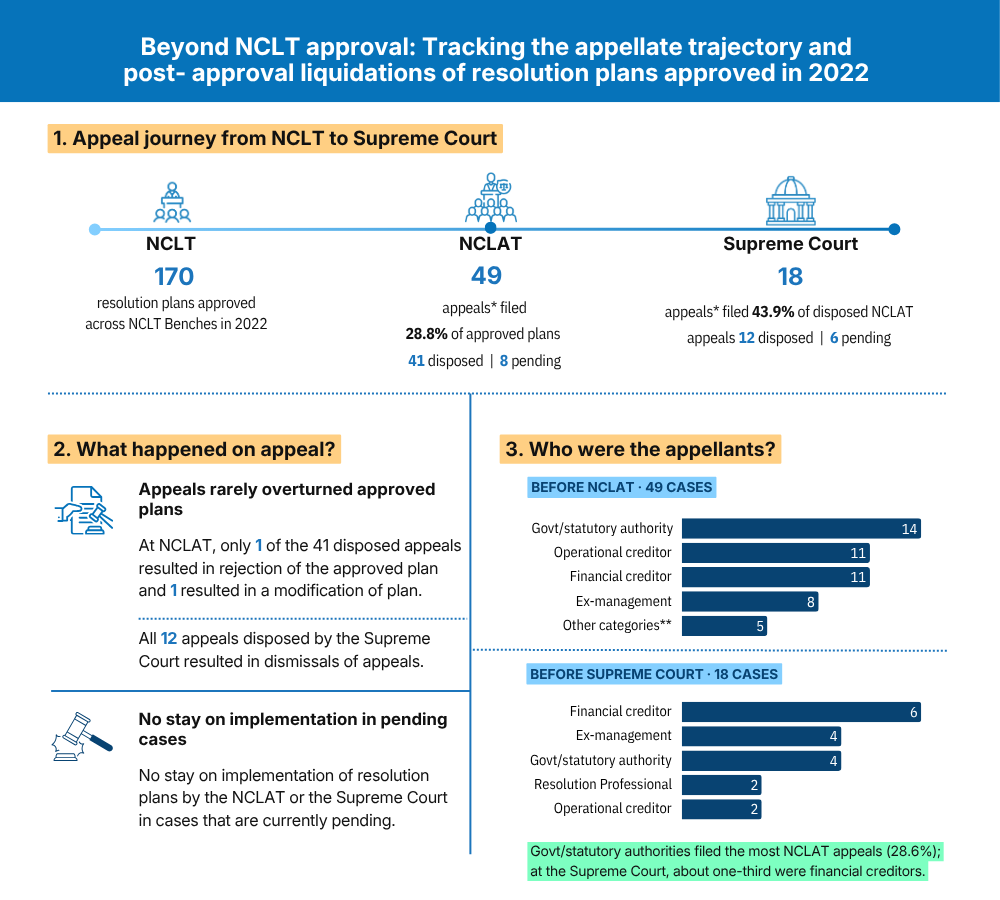
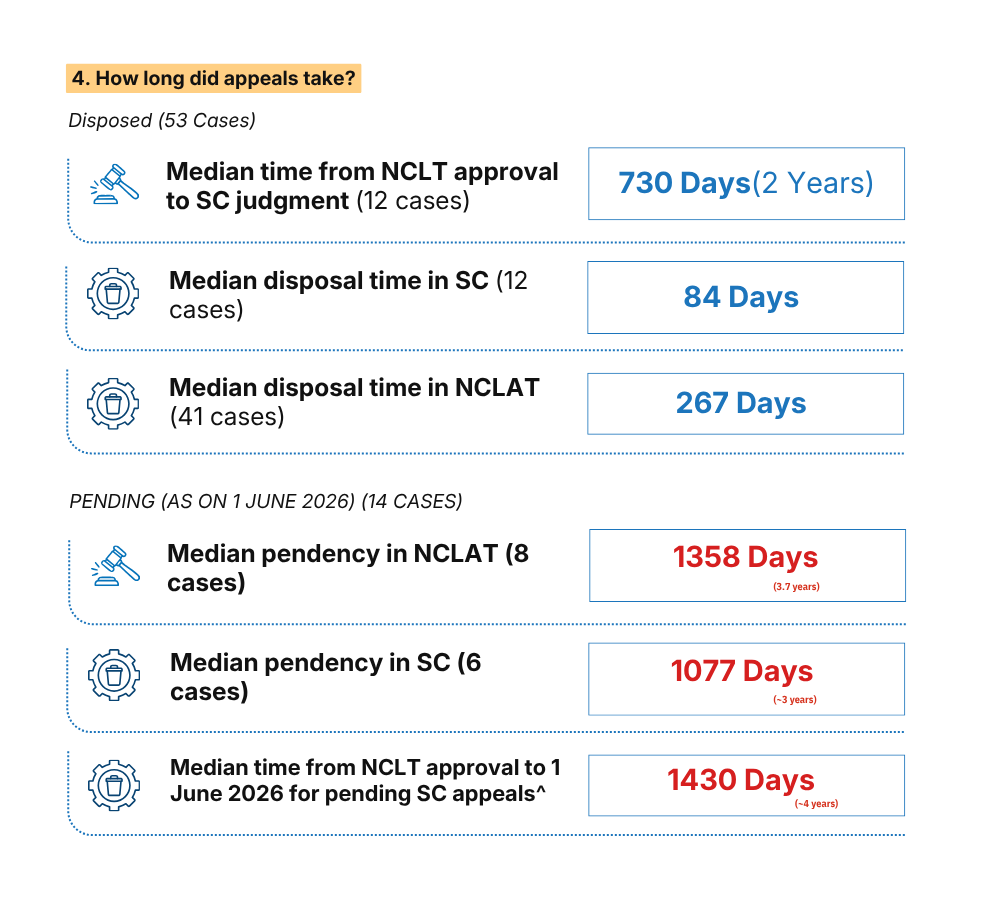
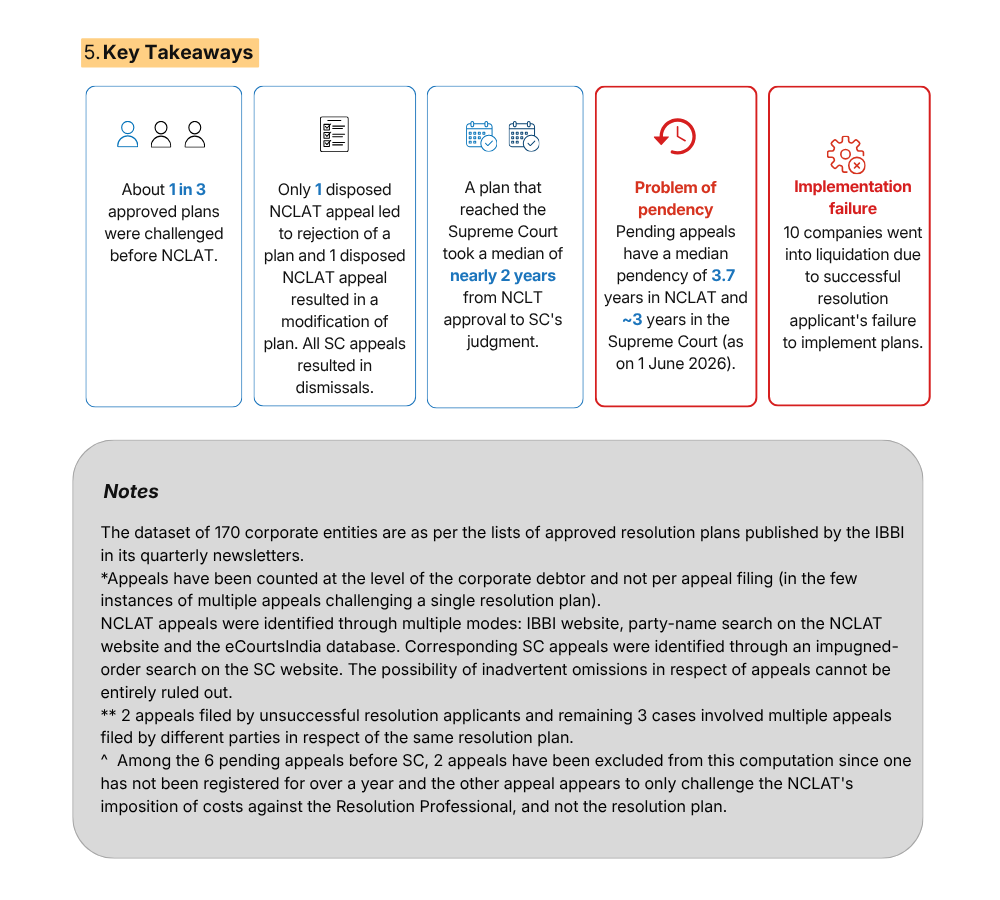
An approved resolution plan usually signals the successful completion of a corporate insolvency resolution process. However, the outcomes and disposal timelines of appeals challenging such approved plans and the post-approval liquidations are rarely evaluated. These aspects have a direct bearing on the Insolvency and Bankruptcy Code’s (IBC) core principles of time-bound resolution and finality, and are critical to ensuring certainty for both investors and creditors. This paper evaluates the appellate trajectory of 170 resolution plans approved by the National Company Law Tribunal (NCLT) in 2022. The study finds that 49 plans (28.8%) were challenged in appeal before National Company Law Appellate Tribunal (NCLAT) and 18 (43.9%) of the 41 disposed appeals were further challenged before the Supreme Court. Appellate fora rarely interfered with approved plans, with only 1 appeal resulting in a rejection of plan. The median disposal time was 267 days for the NCLAT and 84 days for the Supreme Court. However, the median pendency exceeds 3 years for the 8 appeals pending before the NCLAT and the 6 appeals pending before the Supreme Court, although implementation of plans has not been stayed in these pending appeals. Separately, liquidation orders were passed in respect of 10 entities, all attributable to the successful resolution applicants’ failure to implement plans. Through case-specific observations, the paper examines the factors contributing to prolonged appellate proceedings, the relation between type of disposal (merits v. maintainability) and timelines for disposal, the appellant profiles and the consequences for implementation failures. Finally, the paper makes a few recommendations to safeguard the time-bound resolution and value maximization objectives of the IBC.
Summary
-
Rule of Law ProjectRule of Law Project
-
Access to Justice SurveyAccess to Justice Survey
-
BlogBlog
-
Contact UsContact Us
-
Statistics and ReportsStatistics and Reports
© 2021 DAKSH India. All rights reserved
Powered by Oy Media Solutions
Designed by GGWP Design