CHAPTER 19
Aishani Rai and Ava Haidar
“Take to the path of dharma – the path of truth and justice. Don’t misuse your valour. Remain united. March forward in all humility, but fully awake to the situation you face, demanding your rights and firmness.”
◆ The COVID-19 pandemic has highlighted the significant importance of technology in the judicial system;
◆ Efficiency, innovation and human resource expertise are some of the ways in which private developers can support the government;
◆ Digital infrastructure creation must, in some ways, guard against the nearly proprietary nature of control over sovereignty;
◆ Inconsistencies in reporting, missing data and restricted access are com- mon problems that plague judicial data in India, amplifying issues of sovereignty;
◆ The commercial private sector is adroit in creating technology for mass consumption, but may not submit itself to standards of transparency.
This chapter describes the context and unravelling of connections between sover- eignty, justice, digitisation and financial development. An efficient justice delivery system is characterised by how easily citizens can access justice. Access to justice is the foundation on which the quality of life of an individual is based. Access deter- mines the singular right of inclusion in a justice system, which has implications for the social and economic future of society as a whole. 1 Noting the criticality of access to justice, Article 39A of the Indian Constitution stipulates that ‘the state shall endeavour that the legal system promotes justice and that no citizen is denied justice due to economic or any other disability’. The Supreme Court has recognised access to justice as a fundamental right under Article 21 in the case of Anita Kushwaha v. Pushap Sadan. 2
The COVID-19 pandemic has highlighted the importance of technology in the judicial system. As the justice delivery system came to a standstill, it was technology that came to the rescue of litigants. However, the transition from physical to digital was not smooth given the sheer lack of technological advance- ment in our judicial infrastructure. 3 For instance, the absence of sophisticated software or hardware impeded the functionality of digital courts. Additionally, litigants, lawyers and judicial officers grapple with structural issues of the digital divide and digital illiteracy, hindering the progress towards digitally delivered justice.
Given the growing support for digital governance in India today and the need to build digital infrastructure for justice, this chapter seeks to highlight the present role of technology in justice, as well as its connection with the values of sovereignty. We also seek to understand the possibilities of creating, funding and management of such technologies in ways that best align with the interests of the state, citizens, and those who can make the publicly-beneficial vision of digital-judicial infrastructure a reality.
The scope for technology deployment in the judicial system is immense. In the case of Anita Kushwaha , four facets of access to justice were identified. The state has a duty to provide an effective adjudicatory mechanism. The mechanism so provided must be reasonably accessible to the litigant in terms of distance and must be cost-effective. Finally, the process of adjudication must be speedy.
Technological deployment can equip judicial processes with transparency, accountability and inclusion, which are hallmarks of an efficient judiciary. For instance, e-filing services ensure that every litigant or lawyer from rural and remote areas can file documents digitally, overcoming obstacles of long distances, costs of travel, expenditure on paperwork and other physical barriers. However, in a population with differential access, digital capacity and infrastructural gaps, tech-mediated access to justice is likely to widen inequalities amongst diverse communities.
The private sector can play a very important role in the digital transforma- tion of judicial services. Efficiency, innovation and human resource expertise are some of the ways in which private developers can support the government. For instance, the overarching Digital India mission recognised the vitality of pub- lic-private partnership models, given that the critical infrastructure development programmes in India have been successful with the participation of the private sector. 4 Other examples include widely-used digital public infrastructures such as DIGIT (Digital Infrastructure for Governance, Impact and Transformation), where urban governance services are transformed by non-profit creation and phil- anthropic base funding. 5
However, as we move towards digitisation in justice, with increasing involve- ment of the private sector, the role of the state may seem limited. Justice delivery may witness increased participation of the private sector in multiple avenues – from data collection and categorisation – to case and practice management, and the online resolution of disputes.
DAKSH India has mapped private sector intervention in the law-tech space in India. This can be categorised under four broad areas:
1. Disseminating public information
2. Facilitating self-services
3. Providing value-added services
4. Creating platforms for multiple purposes 6
In what was previously a state-controlled sphere, digitisation of justice delivery will witness the state and private sector participating and competing with equal fervour. Thus, as justice delivery is a core function of the state, the entry of the private sector opens up questions about the nature of control the state possesses over technological development in India.
To reassert authority over the internet and protect citizens and businesses from the manifold challenges to self-determination in the digital sphere 7 , these new aspirations suggest that around the world, modern governance is increasingly mired in the possibilities of an online age.
Specifically, it is a matter of domestic sovereignty that is being renewed through Julia Pohle and Thorsten Thiel’s work on ‘digital sovereignty’. 8 It is from here that we may begin to open questions about the intersections of governance, digitisa- tion and sovereign self-determination.
Sovereignty, at its heart, is a lever of supremacy. Foreign national forces cannot impose their will over and above that of a state when it comes to its subjects. When faced with this possibility, it is a breach of sovereignty, implying that a state must be free to use at its disposal any means to subdue the threat.
In democracies like India, we may unconsciously support this notion by elect- ing those who protect certain ideals, safeguard us against harm, and strengthen our laws and Constitution without prejudice.
These forms of sovereign control can be understood through acts such as deploying soldiers, instating a robust police force, and designing educational policies against unlawful subversion of institutions and ideas.
All these areas have seen considerable technological intervention, where the state has been able to implement digital infrastructure for monitoring, security and even data-sharing for wider knowledge. Thus, sovereignty is enhanced in some areas by the involvement of digitisation. However, ‘sovereignty is susceptible to vested interests. This makes it possible to fix ideas of sovereignty that disable true sovereign behaviour and culture. Individual viewpoints of policymakers, state entities and executive bodies carry power in the determination of sover- eignty in the digital sphere. However, sovereignty may not always be in line with citizen-formed deliberation. Actions towards state-owned civilian data can also create fears around state surveillance in the name of sovereignty. For instance, breach of personal information without civilian consent or knowledge, like the Edward Snowden case.
Snowden, a former computer intelligence consultant, leaked classified informa- tion from the US National Security Agency when he was an employee and revealed the extent of unconstrained exercise of hegemonic power through digital means. 9
Finally, a static definition of sovereignty can unduly benefit those who are historically dominant in a society, excluding the impact of social, cultural and economic forces upon the definition of true sovereignty over time. This, too, can lead to the breach of a state’s internal sovereignty, which is to serve each citizen digitally without prioritising other citizens.
The Pohle and Thorsten definition of digital sovereignty can be interpreted as a combination of infrastructure protection, which enables market competition and enhances individual self-determination. 10 Digital sovereignty over judicial infrastructure must allow for collaboration between the state and private sector and simultaneously propel collaboration amongst litigants, lawyers, judges and court officers, and enhance user experience in the ecosystem.
The state must remain at the centre of digital access to justice with a foothold over judicial digital infrastructure. First, access to justice is a measure of public rectitude with the state at its core. Digital access to justice cannot be isolated from the state. Principles of liberty, equality and non-discrimination enshrined in our Constitution are integral to the concept of digital access to justice.
Second, the absence of state control in intervention or regulation can lead to judicial digital infrastructure being largely operated by the private sector, which can be a conduit for the commodification of justice. This may increase existing structural inequalities while accessing justice and rights, based on socio-economic status and can forsake the marginalised. The strength of a judiciary lies in its abil- ity to maintain order and justice, as well as establish its power against disruption and unjust circumstances.
One may measure the quality of justice from not just its authoritative respon- sibility, but also the lengths it goes to protect the weakest of society from the strongest.
Indian judiciary, in particular, must account for various differentiators of soci- etal strength such as caste, gender, economic status and disability, in establishing its authority. It must also protect itself from undue influence, bringing forth the quality of judicial sovereignty.
The technology thus involved in the creation and maintenance of sovereignty-enhancing, judicial-digital interventions, must allay the fears of citizens and must be mindful of the various social differences and the various technological capabilities of Indian citizens.
Technology must prevent the use of data against data principals, or the disem- powerment of individuals from the knowledge of data use. Digital infrastructure creation must, in some ways, guard against the nearly proprietary nature of con- trol over sovereignty. Its portals must be designed for intentional self-entry and identification. A digital-judicial infrastructure must be free from volatility, profit motives and misuse.
Sovereign digital systems may need to be accountable, which for this chapter, may be linked to financing. Here, the state is most accountable to its public for the use of its finances, meaning that the state owes transparency to its citizens in the use of funds for the creation of judicial digital infrastructure. The Union Budget 2022-23 allotted INR 3,393 crore to the Ministry of Law and Justice, with little information on the nature of its division. 11 While accountability is fundamental, there are various other functions that financing can serve to make technology viable, should other entities in the private and philanthropic sectors be involved.
Factors such as the distribution of talent in digital creation, the mindset required for the greatest disruptions, the power of connection with communities in need of digital representation, and latent funding capacity can drive the proper use of digital-judicial infrastructure if implemented properly. The ability to serve these individual factors has been demonstrated by out-of-state actors, allowing for funding possibilities.
The following section maps the presence of digital infrastructure in the justice-delivery system and focuses on the reclamation of sovereignty. We deep dive into judicial data as a type of infrastructure, highlighting the roles of the state and private sector concerning concerns of sovereignty. Section III will delve into the strengths and weaknesses of actors in the public, private and philanthropic sectors, and understand the partnerships that can facilitate a healthy digital judicial infrastructure. Section IV concludes the paper and provides further areas of inquiry.
Technology has increasingly been perceived as the key enabler of access to justice in India. The Supreme Court E-Committees draft Vision Document for Phase III lays down the framework for a Justice Stack seeking to integrate technology seamlessly into the justice-delivery system enabling access to justice.
The Justice Stack enables the realisation of sovereignty by enabling state con- trol over digital infrastructure, engaging meaningfully with the private sector and enhancing the rights of citizens. For the state, the Justice Stack envisages the deployment of technology in justice-delivery systems to make justice more acces- sible, affordable, transparent and accountable. 12 For citizens, the Stack, which is founded on the principles of DEPA, aims at enhancing citizen-centric governance, empowerment with greater control and access to their personal data and defining the scope within which external institutions can seek access to the same. 13
We must understand how digital sovereignty is operationalised in the judicial realm. Sovereignty in judicial-digital infrastructure should focus on control and protection. Control refers to control over design, and protection infers safeguards against unauthorised access to digital infrastructure or from threats arising out of refusal of service.
In the case of judicial digital infrastructure, exercising control by the state would be tantamount to creating and maintaining the design of the infrastructure, which places the citizen at the centre of services. Private sector intervention can be chalked out by the state through protocol and tools; provided the process is open to private parties and that they are key users and deploy the architecture. Judicial- digital infrastructure must be secure from foreign threats, which translates to an undisrupted availability of information that has not been tampered with. If the private sector controls the flow of judicial information and infrastructure, then it can exercise control by denying services to citizens or bargaining with states.
There are several interventions by the private sector in the law-tech space. This paper relies on judicial data as the primary example to explain how sovereignty is affected due to private sector involvement. The technology surrounding judi- cial data has the potential to enhance the quality, confidentiality and security of information, as physical artefacts are more susceptible to interference and loss or damage. Judicial data can be wielded to possibly understand judicial exclusion and socio-economic representation on a national scale. Additionally, judicial data is implicated with the question of digital sovereignty, given the involvement of the private sector in producing and managing such data.
We must first understand what comprises judicial data. A broad definition of judicial data must be adopted, not just limited to judicial statistics, but should consist of court judgments, video recordings of court proceedings and legisla- tive texts 14 – data and information that is vital to stakeholders of the judicial ecosystem. We understand judicial data as a critical judicial digital infrastructure with capabilities to affect sovereignty. Free flow of judicial data is vital to a sound judicial system and multiple actors play crucial parts to make this data available to its intended recipients.
Judicial data is a site where different actors like the state, private sector and stakeholders of the judicial ecosystem like litigants and lawyers, interact, creating agreements and terms of engagement, apart from conditions of partnership and governance. Currently, private sector involvement may be low in disseminat- ing public information, as reflected in research conducted by DAKSH India, 15 however, by providing a direction to the private sector, the state can leverage its capabilities to maximise benefits. For instance, the National Judicial Data Grid was an attempt to disseminate aggregated statistics collected by various e-Courts. However, the insufficiency of the Grid to fulfil its intended purpose has led to private sector intervention. 16 Several non-profit organisations such as Agami have tried to fill this void in judicial data through interventions such as the Justice Hub that seeks to make open data a reality in justice delivery. 17
Judicial data forms the building block of the envisioned Justice Stack, which is imagined as a public infrastructure. 18 Access to good quality judicial data can bolster state sovereignty over judicial digital infrastructure by strengthening the access of citizens to justice. It will also create a framework of accountability and transparency in the justice delivery system. For citizens, the Justice Stack ‘will enable any litigant or lawyer to file a case from anywhere, at any time, without having to approach multiple windows at courts’ and for the state, the quality of justice delivered is enhanced as judicial data provides useful insights to judges on the quality of their work.
Judicial data in India has immense potential to facilitate greater access to justice by enhancing resource allocation and improving judicial efficiency. 19 However, it is still largely unstructured and underutilised. Inconsistencies in reporting, missing data and restricted access are common problems that plague judicial data in India, amplifying issues of sovereignty. 20 For instance, missing data makes it impossible for litigants to access decisions in their own cases, impeding justice.
Intervention by the private sector may help improve the efficiency of the justice delivery system by filling the void through innovative technological advance- ments. This may enhance the state’s capacity to maximise control over digital infrastructure and exercise its sovereignty.
However, private sector deployment is not free from risks posed to sovereignty. Where the private sector begins to compete in the commodification of judicial data, data becomes more easily accessible to some communities as opposed to socio-economically weaker sections of society. When citizens claim constitutional rights against the state, these rights may not be available against private entities. Issues of sovereignty are exacerbated when the state relies on the private sector to make data available. Threats of arbitrary suspension and reduced affordability loom over the state in the absence of regulation. 21
Without regulation or standard operating procedures governing judicial data, publication of the data compromises personal, sensitive information, leading to privacy concerns. This affects user agency, trust and experience in judicial digital infrastructures. These issues relating to access, affordability, user experience and trust, create friction and reduce utility and value derived from digital infrastruc- ture for users in the judicial ecosystem.
This calls for the intervention of state regulation to set the framework of user rights and guiding principles of judicial data governance and management. Frameworks must stipulate the roles of the state and the private sector in develop- ing judicial-digital infrastructure. They must define the scope for interaction and collaboration by financing and capacity-building models as a means to reinforce and reclaim sovereignty over judicial data and digital infrastructure.
For instance, sovereignty over judicial-digital infrastructure can be reclaimed by formulating procurement and intake protocols of judicial-digital infrastructure, deploying integrity measures and integrating review and feedback mechanisms.
The task of assessing the quality of digital-judicial infrastructure may mirror our relationship with other public systems like roads, transport systems, education and water. What is the quality of the infrastructure? How well does it reproduce outcomes for the individual citizen? Can citizens trust its authority for redressals? Can we safely fall back on our rights as citizens of a sovereign nation to ensure we receive our due?
These are questions that we ask of well-governed and systematised public goods, borne out of our relationship with publicly-arranged and funded infrastructure. We must ask similar questions of our judicial infrastructure. The Department of Justice provides us an understanding of what we can expect, which can be described as: ‘adequacy of judicial infrastructure is a prerequisite for reduction of pendency and backlog of cases in courts.’ 22 What we have explored in the previous sections are possible challenges posed by the physicality of the judiciary, such as extensive paperwork, travel time and expenditure of the litigant to courts, and additional expenditures to intermediaries for access.
Other problems include social differentiation, for which physical interaction can be pivotal in delivering outcomes. The next step is to identify the intersection between resolving these issues with an adequate digital approach to dedicated judicial infrastructure. Communication, identification, document verification, and evidence, must be combined with the benefits of technology: transparency, efficiency, automation, inclusivity and security to yield a trustworthy and config- urable public infrastructure.
In conclusion, there is a need to recognise judicial digital platforms as infrastructural , in that they must be envisioned as part of a whole-bodied system of services that the state provides its subjects.
In much the same way that we entrust our civic bodies with ensuring good roads, transport, education and water, we must achieve a relationship with the government as one that provides digital infrastructure that facilitates a healthy system of justice delivery.
Digital infrastructure for welfare must be seen as the work of ‘institutions that are persistent and resistant to sectional interests’ 23 that are unstoppable in the reproduction of just outcomes as well as shielded by interests that could compro- mise sovereign judiciary. For such infrastructure to embrace accountable gover- nance, as well as high-quality creation and outcomes, it is important to factor in various indigenous digital talents, and not simply that of the state. With a layered concept of justice as one that is delivered digitally, we must begin to understand how such an infrastructure can exist, particularly in creating sustainable, sover- eignty-led funding.
What do we know about the digital ecosystem of creation? Who creates success- ful digital works? Who is interested in its maintenance and where can combined intentions of community gains, financing of technology and maintaining judicial order be found? One way to determine this, is to identify different sectors of development – within the state, private corporations, philanthropy, and academia – and understand the different capacities and inclinations they may have towards and against the project of financing sovereign, judicial-digital infrastructure.
A general sense of sectoral funding capacity becomes as crucial as intentions of committing to public welfare. Given the novelty of digital infrastructure, it is important to account for talent and innovative risk. Development of technology must be carried out by experienced hands as well as mindsets geared for creative disruption without fear of failure, which may well occur. These varied parameters can manifest differently in different sectors. For instance, while local philanthro- pies are capable of carrying the vision for public good, they have limited sources of funding. The state, on the other hand, has the requisite funds and the right intentions towards the masses but may lack the creativity of the private sector in making technological transformations.
The commercial private sector is adroit in creating technology for mass con- sumption, but may not submit themselves to standards of transparency or true outcomes of justice. Different sectors have their own strengths and weaknesses leading to a more decentralised vision of judicial infrastructure funding.
A more organised picture of their demonstrated capabilities and funder types is provided in Table 1 and Figure 1.
Table 1: Features of Technology and Funder Types
|
Feature | Funder Type -> |
Public |
Philanthropic |
|
Private |
|
|
State and state- affiliated bodies |
Foundations and trusts |
Commercial- tech |
Academic (legal institutes, law colleges, technologi- cal institute) |
Legal- Private (legal-tech startups) |
|
|
Funding |
Stable, High |
Low, Stable |
High |
Low |
Low |
|
Talent |
Low |
Can be high |
High |
High |
High |
|
Public Commitment |
High |
High |
Low |
Can be high |
High |
|
Ability to risk innovation |
Low |
High |
Can be high |
High |
High |
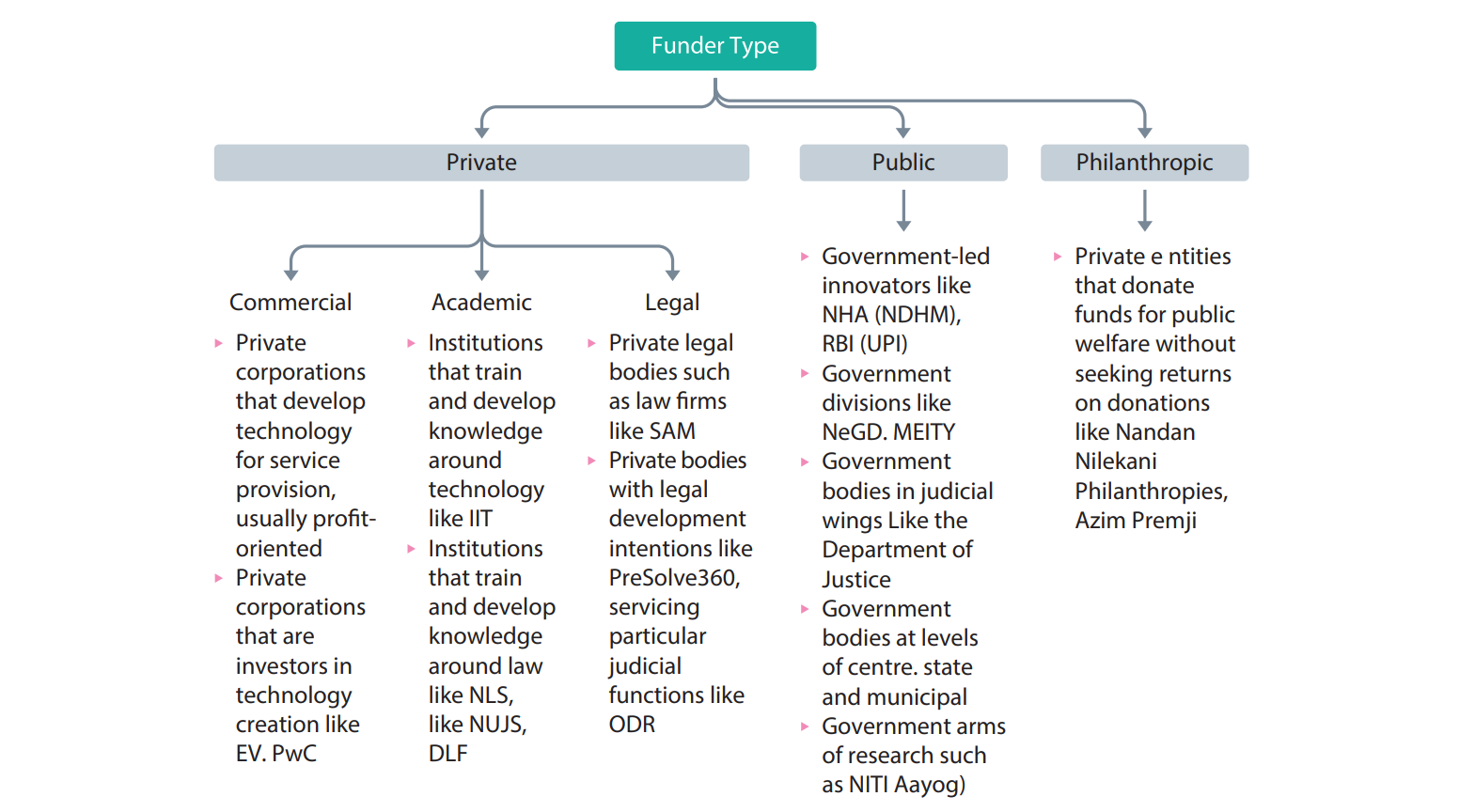
Figure 1. Detailed Overview of Funder Types
As observed, no single sector is independently capable of guiding the creation or financing of optimal technologies for population scale. Variations may stem from particular reasons;
1. State: The state amasses, and has the authority to amass, adequate funds for infrastructure projects in the public interest. Public funding carries an implicit commitment towards the welfare of citizens, it is trustworthy, valuable, stable, and is not volatile in the long term. However, the state has demonstrated less talent compared to other sectors, in the creation and configuration of smart digital infrastructure. This could be due to the slow speed of capacity-building, bureaucracy-induced stagnation, inexperience and inadequate practice. Furthermore, the state is risk-averse to experiments around technology.
2. Commercial: Technological innovation has seen possibly the greatest strides through the work of the private sector, translating into a high availability of latent and active talent. Importantly, such talent is continually geared towards the sharpening and improvement of the technology itself, allowing the sector to address the internal failures of technology. However, the sec- tor’s ability to serve the advancement of public goals for all citizens can be uncertain, and funding can be less stable than the state, owing to environ- mental or market changes.
3. Academic: Institutions may have a pool of talented people, a positive attitude towards innovation, may not be risk averse, and can contribute knowledge to the theoretical and technical requirements of judicial tech- nologies. They may work towards social commitments and responsibilities, but independent funding in these institutions may be low. Experience in creation has been demonstrated by institutions like IIIT-B (Modular Open Source Identity Platform - MOSIP), making academic bodies partners, if not funders, in digital infrastructure creation.
4. Legal-private and civil society: Players in legal tech and civil society are talented and have a risk appetite for innovation, as well as a commitment towards societal good. Funding from these areas may be limited. Law firms may be induced to consider contributing to the knowledge systems behind judicial technology through research and development, adding to its own repository of knowledge as well as a source for larger public use.
5. Philanthropic: Commitments to public welfare, the ability to take risks in financing, and possibly talent, are high on the agenda of Indian philanthro- pies. While they represent a limited source of funding in India, considerable innovations in the digital-public atmosphere have been made possible by philanthropic funding, such as DIGIT. Funding from this sector is compar- atively stable due to the time-bound nature of grants.
The shape and size of funding capacity across sectors are different and are influ- enced by experiences with digital creation. Infrastructure financing is crucial in trying to match the capabilities of different sectors with the technological need for judicial infrastructure. Additionally, it is necessary for infrastructure financing arrangements to uphold ideals of sovereignty.
Given our constraints and our special focus on judicial data, we look at the possible funding roles for different sectors.
1. State: Given the substantial and stable nature of public funding, as well as the demonstrated talent of the state in instituting large-data tasks like regis- tries, for instance, the Healthcare Professionals Registry, the state should be directed towards the creation and maintenance of judicial data repositories. The state may not need to inspire creation but can be the final arbiter on the data collection and presentation model. It should also ensure measures of quality control and monitor the feedback that is produced within the system of players. In essence, public funding must represent base funding for the platforms that carry judicial data, as well as the overall governance of these platforms.
2. Commercial: While talent and funding are accounted for, a crucial com- ponent of sovereignty may be lost in the commercial crafting of technology for the cause of greater public justice. The intent and priority of commercial actors in building non-proprietary, non-excludable and non-profitable data cannot be guaranteed. Thus, while commercial actors in the private techno- logical sector can service high forms of digital goods and infrastructure, they may not be ideal for involvement in sovereign and essentially judicial digital infrastructure. More research may be required to understand the positive role that the commercial ecosystem can play.
3. Academic: Educational institutions in legal, technological and other spaces can be crucial contributors to design, leverage partnerships with local com- munities, build capacity, and provide suitable and researched methods of local data collection. In general, academic funders can perform the role of educating the digital-judicial-funding ecosystem.
4. Legal-private and civil society: As has been demonstrated by legal-tech firms like PreSolve360, the role that can be played by legal-private enti- ties lies in creating public awareness, offering local solutions, bridging gaps within judicial data, building more dedicated pictures of litigant capaci- ties, language, gender, caste and religion, among other social differentia- tors. Other demonstrators include Agami, who has worked specifically on judicial data, such as on their Data for Justice (D4J) movement, Budgets for Justice, 24 where tools to educate the public about judicial data have been developed. Private law firms too can participate in similar roles, particularly funding research into areas of pressing concern such as the digital divide in India and the effect it has on judicial data creation.
5. Philanthropic: Given the often independent and socially-forward nature of philanthropies, they are well-suited to fund fruitful, risk-friendly and innovative creation of judicial data technologies. With the independence to partner with private developers whose intentions align with their own, and possibly with those of a digital judicial system, philanthropies may be in the best position to create data models for the state and judiciary.
Given a rich ecosystem of digital creators and financiers, an approach to funding technologies like judicial data should work to connect these actors and provide suggestive capacities. This allows a consonance in agendas or a formula for har- monious digital judicial intervention across different sectors. The focus in envi- sioning a financial network should be on delineating the roles that different actors can play, ensuring that the state sets its boundaries of sovereignty over judicial data and minimises clashes and threats to it. Slovenia’s case law portal ‘Sodna Praksa’ is an example. It produces decisions for selected court cases in Slovenia, where the data is anonymous and public access to the portal is free. Commercial and non-commercial use of the data is entertained as long as credit is given to the Slovenian Supreme Court. 25 Here, the final authority is made explicit while the freedom to utilise judicial data is also clear.
Bringing together the concerns of a sovereign judiciary with funding technologies for its purpose, we arrive at an understanding of the demands of such technol- ogies, as well as a picture of who may best meet those needs. While the state and philanthropic sectors can be abstractly understood as having the required intentions of social progress, the private sector’s expertise in digital innovation must be leveraged with care and caution.
On the other hand, private sector hesitancy may exist where state authority and regulation is strong. The disruptive nature of technological creation rests partly in the ability of creative entities to think limitlessly, which may not serve the interests of the state in creating stable infrastructures, but is crucial to the making of rev- olutionary digital goods. In the section on funding partners, we understand that an ability to take risks in innovation is crucial to digital disruption. This quality of technological development needs to be safeguarded and backed up by fail-proof methods and requires a deeper understanding of the private sector’s inclination towards the state in the collaborative creation of digital infrastructure.
Through sovereignty, both abstract and digital, we explore a wide range of priorities and possibilities when developing and financing technology for the judiciary. We then narrow our inquiry to the treatment of judicial data, where we look at the impact of private sector involvement in the provision and management of judicial data. Within the parameters of financing judicial digital infrastructure, we evaluate the capabilities of various sectors and make arguments for and against the involvement of specific actors in different tasks of digital creation.
|
Editors’ Comments Having discussed the issue of sovereignty, the volume now moves to the much-talked-about startups. Stories of disruptions heaved upon the economy and society abound, and the next chapter discusses how that same disruptive power can be leveraged to address the first A of this volume: Access. |
1 India Justice Report: Ranking States on Police, Judiciary, Prisons and Legal Aid, TATA TRUSTS (28 January 2021) https://www.tatatrusts.org/insights/survey-reports/ india-justice-report. (Last accessed on 14 April 2022) . (Last accessed on 14 April 2022)
2 (2016) 8 SCC 509.
3 TATA TRUSTS, supra note 1.
4 E-governance and Digital India: Empowering Indian Citizens Through Technology , DELOITTE (September 2015), https://www2.deloitte.com/content/dam/Deloitte/ in/Documents/technology-media-telecommunications/in-tmt-empowering-indi- an-citizens-through-technology-noexp.pdf. (Last accessed on 14 April 2022)
5 DIGIT Urban Stack , eGov FOUNDATION, https://egov.org.in/about-us/. (Last accessed on 14 April 2022)
6 Mapping the law-tech landscape for India , DAKSH & IIT-DELHI (Dec 2, 2021).
7 Julia Pohle & Thorsten Thiel, Digital Sovereignty, 9(4) INTERNET POLICY REVIEW, 1 (2020).
8 POHLE & THORSTEN, supra note 7.
9 Id.
10 Venkatesh Hariharan and Dr. Sarayu Natarajan, Digital sovereignty and payments: A case study of the National Payments Corporation of India (2021) (forthcoming).
11 Ministry wise Summary of Budget Provisions https:// www.indiabudget.gov.in/.(Last accessed on 14 April 2022)
12 Digital Courts Vision & Roadmap Phase III of the eCourts Project , E-COMMITTEE SUPREME COURT OF INDIA, https://cdnbbsr.s3waas.gov.in/s388ef51f0bf911e452e8dbb1d807a81ab/uploads/2021/04/2021040344.pdf
13 Amitabh Kant, Preeti Syal & Desh Gaurav Sekhri, Time for a Justice Stack, FINANCIAL EXPRESS (14 July 2021, 6:00 am), https://www.financialexpress. com/opinion/time-for-a-justice-stack/2289629/. (Last accessed on 14 April 2022)
14 Prashant Reddy T, et. al., Open Courts in the Digital Age: A Prescription for an Open Data Policy, VIDHI LEGAL (2019), https://vidhilegalpolicy.in/wp-content/ uploads/2019/11/OpenCourts_digital16dec.pdf. (Last accessed on 14 April 2022)
15 DAKSH & IIT-DELHI, supra note 6.
16 REDDY, supra note 14.
17 Justice Hub Dataset , AGAMI & CIVIC DATA LAB, https://justicehub.in/. (Last accessed on 14 April 2022)
18 KANT, supra note 13. https://www.financialexpress.com/opinion/time-for-a-justicestack/2289629/ (Last accessed on 14 April 2022)
19 Tushar Anand & Karan Gulati, The Unrealised Potential of Judicial Data , THE INDIAN EXPRESS (18 December 2020 6:27 PM),https://indianexpress.com/ article/opinion/the-unrealised-potential-of-judicial-data-7110258/#:~:text=The%20 scope%20of%20judicial%20data,courts%20and%20improve%20judicial%20efficiency. (Last accessed on 14 April 2022)
20 Id.
21 Renata Avila Pinto, Digital Sovereignty or Digital Colonialism , 27 Intl J. on Human Rights (2018), https://sur.conectas.org/en/digital-sovereignty-or-digital-colonialism/. (Last accessed on 14 April 2022)
22 Judicial Infrastructure , DEPT. OF JUSTICE, https://doj.gov.in/national-mission/ national-mission-for-justice-delivery-legal-reforms/judicial-infrastructure (Last accessed on 14 April 2022)
23 Richard Pope, Institutions for the Long Term , DIGITAL PUBLIC GOODS (July 2021) https://digitalpublicgoods.xyz/institutions. (Last accessed on 14 April 2022) 24 Budgets for Justice , JUSTICE HUB, https://budgets.justicehub.in/ (Last accessed on 14 April 2022)
25 Marko Markovic, Survey of Open Data in Judicial Systems, https://www. researchgate.net/profile/Stevan-Gostojic/publication/299352996_Survey_of_ Open_Data_in_Judicial_Systems/links/57b4322a08ae19a365fadc33/Survey-ofOpen-Data-in-Judicial-Systems.pdf(Last accessed on 14 April 2022)